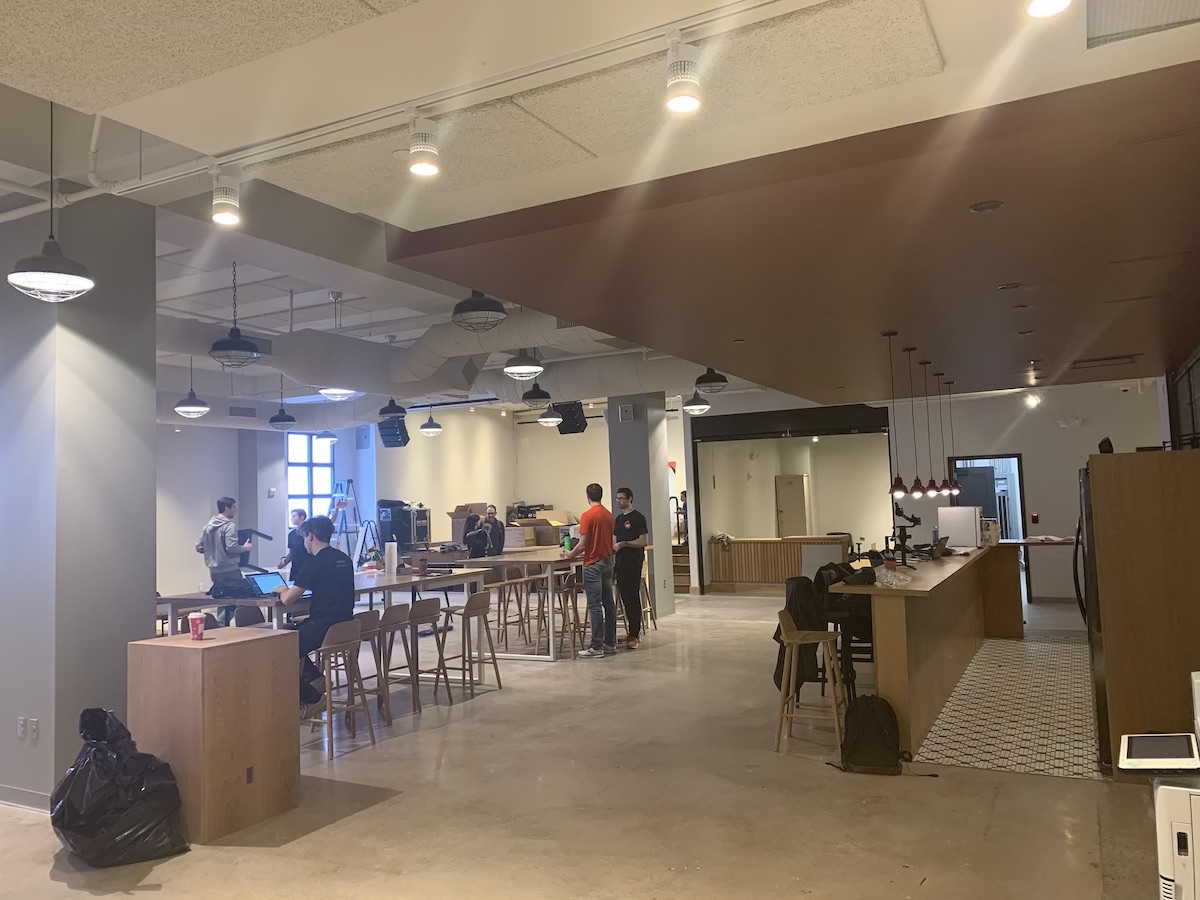
When REC Philly closed its 10,000 square foot Fashion District hub on December 20, 2025, Philadelphia lost more than studios. It lost a place where independent creatives could find each other.
For six years, Ninth and Market gave part of the city’s creative economy a visible address. A rapper could book a recording room. A photographer could use the visual lab. A podcaster could record an episode. A designer could work, attend a workshop and meet somebody who might become a collaborator.
Those everyday encounters mattered. Having equipment is one thing. Having people around who understand what you are trying to make is another.
REC attributed the closure to unforeseen circumstances in its message to members, reported by Technical.ly. The organization did not close entirely. Its current website presents an agency working exclusively with brands and drawing on its creative network for selected projects.
The shared rooms closed. REC’s agency work continued. For the individual creator, those are different kinds of access.

What REC held together
Calling REC a coworking space misses part of what made it useful. Its studios put recording, photography, design, performance, equipment and workspace in one building.
Someone starting out did not have to find a private studio, a separate event venue and an established network before getting to work. They had somewhere to begin.
Membership did not erase every barrier. It still cost money, and no space can serve everybody equally. But the hub made the next step easier to understand. You knew where to go.
Without that address, finding a room becomes another job. So does finding equipment, meeting collaborators and figuring out which opportunities are worth your time. That is a lot to add to somebody already doing their own production, promotion and administration.
The city kept making
Philadelphia was never creating in just one building. Its neighborhood studios, artist run spaces and independent organizations existed alongside REC, and many were here long before it.
Look at what is happening this fall. Collective Futures connects more than 30 independent spaces and organizations through exhibitions, performances, workshops and public programs from October 2 through November 15, 2026.
Philadelphia Open Studio Tours brings visitors into artists’ workspaces across the city. This year, studios west of Broad Street open October 10 and 11. Studios east of Broad open October 17 and 18. The program reaches 20 neighborhoods.
Meantime connects creative entrepreneurs with vacant storefronts for temporary projects. Its Meantime on Market program ran through July, showing one way empty commercial space can become somewhere to test an idea in public.
The Village of Industry & Art is bringing studios, makers and organizations into former University of the Arts buildings. Artist housing is still being developed, with opportunities to participate expected in late 2026 or early 2027.
These projects are not proof that former REC members all found replacements. They show the range of places where Philadelphia’s creative life continues. They also show how much of that life depends on people making their own spaces work.
The city has rooms. Finding the right room, and being able to afford it, is the harder part.
Decentralization has a cost
There is power in smaller spaces. They can be more personal and more specific about the work they support. A community darkroom does not have to become a music incubator. A neighborhood gallery does not need to double as a content studio.
Different rooms can protect different kinds of work. That is worth keeping.
But a scattered ecosystem can also be difficult to enter. Someone new may need one place to record, another to shoot, another to perform and another to meet collaborators. They still need to learn who runs those spaces, what they charge and whether there is room for them.
Every handoff takes time, money and transportation. It can take confidence too, especially when you are walking into a room where everybody seems to know each other.
People with an existing network have an advantage. The harder question is what happens to someone talented and serious who has not found theirs yet.
Stop calling survival a strategy
Philadelphia loves a story about artists making something out of nothing. Sometimes that praise lets the people benefiting from the work avoid asking why the artist had so little to begin with.
A space needs rent, equipment, maintenance and people to run it. A crowded event or a successful campaign does not automatically cover those costs. When affordable access depends on a mix of memberships, sponsorships and goodwill, the room can stay busy while its future remains uncertain.
Artists help give neighborhoods their identity. They make the events, images and experiences that people come to Philadelphia for. They should not have to provide all of that culture while solving the infrastructure problem on their own.
REC’s closure and the loss of UArts raise a question the city cannot answer with another celebration of its talent: where can that talent afford to work?
REC’s agency focus does not have to be treated as a betrayal. Brand work and shared studio access have different demands. We should still ask what support is available for the rooms that individual makers need, even when those rooms are difficult to sustain commercially.
Public funding, philanthropy and brands that benefit from local culture should help pay for that access. A logo at an event is easy to see. Affordable studio time may do more for the person making the work.
What should come next
Philadelphia does not need to rush into building a REC imitation. It needs to connect and strengthen the spaces already here.
A shared calendar and a useful map would be a start. So would transparent rates, equipment exchanges and passes that work across participating spaces. A new creative should be able to find a place to work without relying on an introduction from the right person.
Temporary storefront projects need a path toward longer occupancy when they succeed. Brands looking for cultural credibility could fund studio hours and production grants. Developers receiving public support should help make properly equipped space available to local cultural workers.
The city should measure whether artists can stay and work here, alongside counting the events they produce.
None of this replaces the relationships people build themselves. It gives those relationships somewhere to grow.
Across Philadelphia, artists are opening studios, organizing exhibitions, programming storefronts and keeping each other’s work moving. REC helped make some of that energy visible in one place. Its closure should make us look harder at what it takes to keep the rest of those places open.
The work is still here. Philadelphia needs to make it easier for the people doing it to stay.
Sources and further reading
REC’s closure announcement, reported by Technical.ly
REC’s current agency and creator information
Collective Futures and POST 2026
CFEVA’s official POST dates and visitor information
Meantime’s vacant space program
Village of Industry & Art
VIA’s planned artist residences