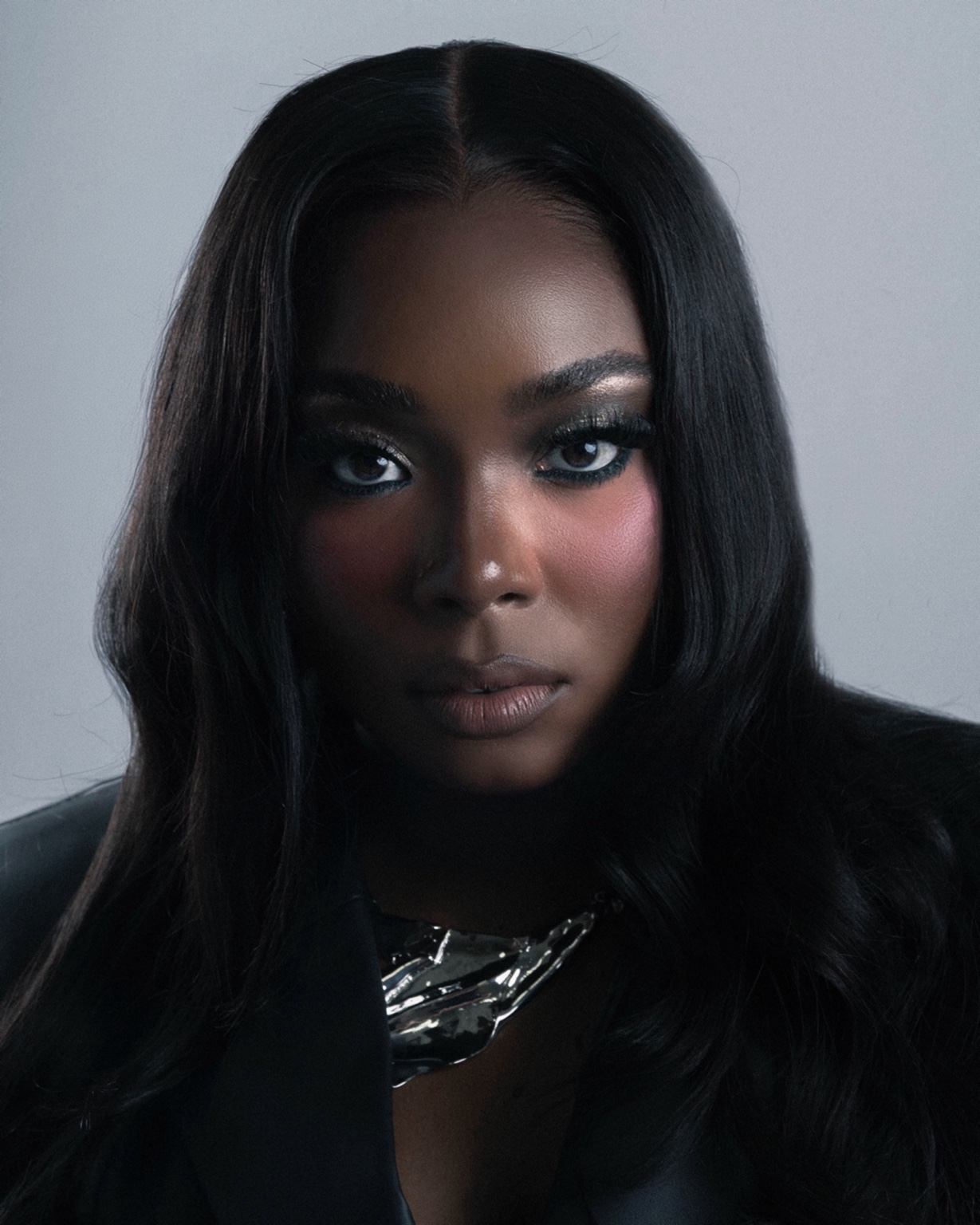
Long before a platform learns what you might play next, discovery begins with someone listening closely and being willing to put their name behind what they hear. Sierra Von has turned that instinct into The Playlist Girl: a trusted space for R&B, independent artists and records that deserve more ears.
She speaks with STURDY about the pull of a record, the difference between discovery and credit, what R&B is missing and why numbers cannot be allowed to train taste.
You’ve built an identity around being “The Playlist Girl.” When did you realize that your ear for music was something you could build a platform around?
I think it took me a while to realize that what came naturally to me was actually a skill. Music has always been a huge part of my life. I’ve been singing since I was four, I grew up in a household where music was always playing, and I was always the person putting people onto songs or artists they hadn’t heard yet.
The Playlist Girl really came from realizing, wait, people actually trust my ear. People would come back and tell me, “You put me onto this person,” or “I found this song because of you.” Once that started happening consistently, I realized I wasn’t just somebody who loved music. I had an ear for finding things, connecting the dots and introducing people to music in a way they trusted. That’s when I started treating it like something I could actually build.
There’s a difference between liking music and being able to curate it. What does a record have to make you feel before you call it Playlist Girl Approved?
It has to make me feel something. And that doesn’t necessarily mean it has to make me emotional or make me cry. Sometimes the feeling is, Oh, this is hard. Sometimes it’s sexy, sometimes it’s nostalgic, sometimes it makes me want to immediately run it back.
I listen for production, vocals, writing and how everything works together, but there also has to be something there that I can’t necessarily teach. I call it the pull. Something about the record has to pull me back toward it. If I’m thinking about the song after it’s over or immediately wanting to hear it again, that usually tells me there’s something special there. Playlist Girl Approved means I’m comfortable attaching my taste and my name to it.
After hearing so much unreleased and independent music, what separates the artists who immediately make you pay attention?
Intentionality. You can hear when somebody is still trying to figure out who they are versus when somebody understands their sound, even if they’re still developing.
And being independent doesn’t mean I expect everything to sound like it had a major-label budget. I actually love hearing the rawness in an artist who is still building. But I want to hear that you care about the details. Did you choose the right production for your voice? Do you know what makes you different? Does the writing feel like you, or does it sound like you’re trying to recreate whatever is popular right now?
The artists who catch me immediately usually have something that makes me curious. I hear them and I want to know more about who they are. You don’t have to be perfect. You just can’t be forgettable.
You don’t have to be perfect. You just can’t be forgettable.
What is R&B getting right now that people aren’t talking about enough—and what is the genre missing?
What R&B is getting right is range. That’s actually one of the reasons I’m so passionate about my R&B Is Not Dead series. People will say R&B is dead because they’re looking for one specific version of R&B, and I’m like, you’re just not looking hard enough.
There are artists pulling from traditional R&B, alternative music, soul, jazz, hip-hop, electronic sounds, even house. There are so many different pockets happening at once.
What I think we’re missing sometimes is tempo and fun. Give me records where people can dance again. Give me personality. Give me a bridge! Give me vocal arrangements. I love the moody R&B space, but I don’t want the entire genre reduced to that. R&B has always been bigger than one mood.
When you discover somebody early, do you feel any responsibility to keep pushing that artist once you believe in them?
Absolutely, especially when I genuinely believe in somebody. I have a real heart for independent artists because I understand how difficult it is to get people to pay attention when you don’t have a huge machine behind you.
And I think discovery is bigger than saying, “I found them first.” I don’t care about getting credit for discovering somebody. I care about seeing what happens when more ears finally get on the music.
So if I really believe in an artist, you’ll probably see me talk about them more than once. I’ll put them in playlists, bring them back into conversations, talk about a new release. Because sometimes people need to hear somebody’s name three, four, five times before they finally press play.
Have algorithms made us better at discovering music, or too comfortable letting platforms decide what we like?
Both.
Algorithms have made music incredibly accessible. You can hear one song and suddenly discover ten artists you never would’ve encountered otherwise. That’s amazing.
But I also think we’ve become a little too comfortable being told what we like. There’s a difference between an algorithm saying, people who listen to this also listen to this, and a human being saying, I heard something in this artist that made me think you needed to hear them.
That human connection is what I don’t ever want us to lose. Curation has context. It has instinct. It can surprise you. An algorithm learns your patterns. A great curator can challenge them. Period.
When an artist has great music but their visuals or branding aren’t there yet, how much does that affect the way you see them?
A lot, because the music might introduce me to you, but your world is what makes me understand you.
If the music is incredible and the branding isn’t there yet, I’m not going to dismiss the artist. If anything, that’s where the creative director side of my brain starts going crazy because I’m immediately thinking about what the visuals could be.
Your cover art, photography, videos, styling, fonts, colors, even the way you present yourself online should eventually feel like extensions of the music. When all of those things start speaking the same language, that’s when an artist stops feeling like somebody who makes songs and starts feeling like they have an actual world people can step into.
How do you balance being honest about a record with understanding how personal it may be to the person who made it?
I always remind myself that somebody put time, money, emotion and probably a piece of their life into this record. So even if I don’t like something, there’s a way to talk about it without being disrespectful.
I’m never interested in tearing an artist down for entertainment. That’s not music criticism to me.
At the same time, if you’re asking me for my opinion, I’m going to give you my actual opinion. I can say the production isn’t working for me, the vocal isn’t sitting right, the writing could be stronger, or this record doesn’t feel fully developed without saying, “You’re trash.” Those are two completely different things.
Honesty and empathy can exist in the same review.
As your audience grows, do you feel pressure to recommend what you know people will respond to?
Sometimes, because once you understand social media, you know certain artists, topics and conversations are going to perform better than others.
But if I only talked about what I knew would get engagement, The Playlist Girl would eventually lose the thing that made people trust me in the first place.
I have to trust my ear. Sometimes I’m going to post something and six people care about it today, but six months later everybody is talking about that artist. Those are actually some of my favorite moments because they remind me why I started doing this. I don’t want my taste dictated by numbers.
Who should people be paying attention to right now, before everybody else catches on?
I know you asked me for one, but I’m The Playlist Girl, so you know I can’t give you just one. There are a few people I really think deserve to be on everybody’s radar right now: Eric Penn, Nali, RJ the Weirdo, CARI, Sweata, Jvck James, Lea the Leox, and GAWD.
What excites me about this group is that they don’t all sound alike. They each have their own identity, their own approach to the music, and something about them that makes me want to keep paying attention. That’s what I’m always looking for. I don’t want to hear an artist and immediately be able to tell who they’re trying to sound like. I want to hear something that makes me curious about where they’re going next.
And some of these are artists I’ve been talking about and supporting for a while, so when I say “pay attention earlier,” that’s really what I mean. Don’t wait until the numbers get bigger or everybody on your timeline starts talking about them to decide they’re worth listening to. There’s so much good music being made outside of what’s being pushed directly in front of us.
So yeah, Eric Penn, Nali, RJ the Weirdo, CARI, Sweata, Jvck James, Lea the Leox, and GAWD. I’m putting all of those names on record now.
Pay Attention Earlier
Eight records from the artists Sierra put on record. Follow the pull, then keep listening.
- Eric Penn featuring YOG!“U-Turn”Listen ↗
- Nali featuring Coi Leray“Maybe”Listen ↗
- rjtheweirdo featuring Ty Dolla $ign“The Perfect One”Listen ↗
- CARI“Crashing Out!”Listen ↗
- Iman Nunez & SWEATA“bed-stuy baby”Listen ↗
- JVCK JAMES featuring Stormzy“Easier Done Than Said”Listen ↗
- LÉA THE LEOX“Fatal”Listen ↗
- GAWD“GTA”Listen ↗